How much energy does an energy system really deliver?
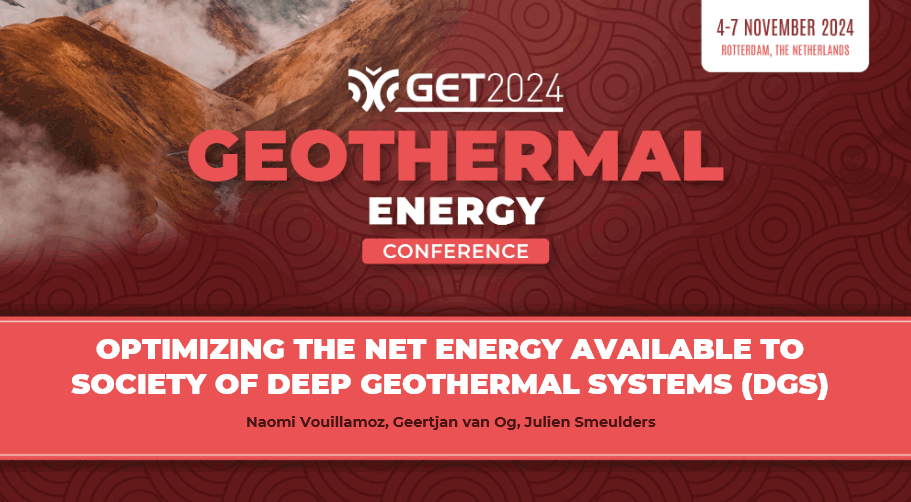
At the 5th EAGE Global Energy Transition Conference & Exhibition (GET2024) in Rotterdam, Naomi presented Optimizing the Net Energy Available to Society of Deep Geothermal Systems (DGS), work developed with Well Engineering Partners and TU Delft’s Joint Interdisciplinary Project 2024.
The presentation challenged a simple assumption behind many energy-transition pathways: producing renewable energy is not enough. Building and operating energy infrastructure itself requires energy, materials, drilling, construction and maintenance. What ultimately matters is how much useful energy remains available to society after these investments are accounted for.
This is where Energy Return on Energy Invested (EROI) and Life Cycle Assessment (LCA) become important. The work presented at GET2024 proposed using these indicators to better understand and optimize the energy and environmental balance of Deep Geothermal Systems.
For geothermal, this creates an interesting perspective. Deep systems require significant energy investment upfront, particularly for drilling. But they can generate local baseload energy over very long operating lifetimes, meaning their cumulative net-energy performance can improve over time.
Shaping deep geothermal with purpose
Our objective is to develop a transparent framework that can help compare geothermal concepts and guide their design around what ultimately matters: maximizing useful energy while minimizing environmental and resource impacts.