
BEYOND TECHNOLOGY
Switzerland’s transition toward carbon neutrality raises more than a technological question. New energy infrastructure is essential, but the scale and speed of the challenge also require us to consider how much energy we use, how decisions are made and what prevents individuals and societies from changing behavior.
PhilTheGap was developed around precisely this challenge: bringing technical and environmental questions together with psychology, social sciences, philosophy, economics, pedagogy and political economy.
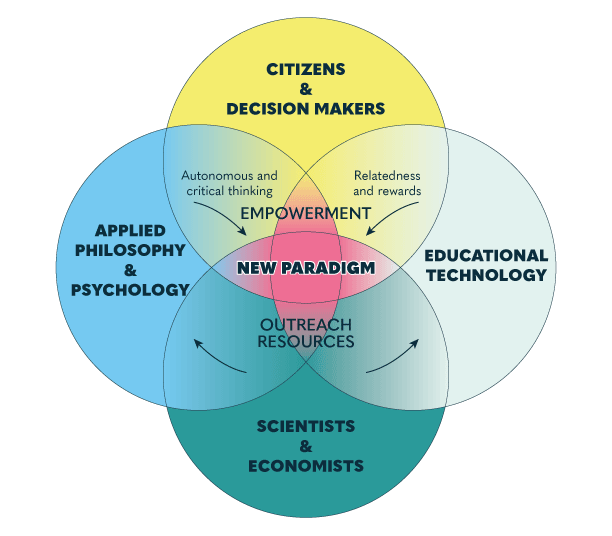
THREE GAPS TO BRIDGE
TIME vs. ENERGY & EMISSIONS
The scale of global energy consumption and emissions is difficult to reconcile with the time available for the transition.
RENEWABLE ≠ SUSTAINABLE
Replacing fossil energy with renewable technologies is essential, but sustainability also requires considering resources, environmental impacts and planetary limits.
PSYCHOLOGICAL & SOCIAL BARRIERS
Awareness does not automatically translate into action. Behavior, social structures, economic incentives and political decision-making all shape the transition.
WHERE THIS THINKING LED
This work was developed and submitted as a consortium proposal for funding under the SWEET program of the Swiss Federal Office of Energy. While the proposal was ultimately not selected for funding, the collaborative work and discussions behind it helped shape a principle that remains central to EAPOSYS today: the energy transition cannot be addressed through technology alone.
Engineering solutions must work within physical and planetary constraints, but they must also make sense economically and respond to real societal needs. This thinking continues to inform our approach: use resources rationally, adapt our economic models and preserve what cannot be replaced.